

Augmentative and alternative communication (AAC) is an area of clinical practice that supplements or compensates for impairments in speech-language production and/or comprehension, including spoken and written modes of communication. AAC falls under the broader umbrella of assistive technology, or the use of any equipment, tool, or strategy to improve functional daily living in individuals with disabilities or limitations.
AAC is augmentative when used to supplement existing speech, alternative when used in place of speech that is absent or not functional, or temporary as when used by patients postoperatively in intensive care (Elsahar et al., 2019).
Low Tech AAC vs Other Forms of AAC.
AAC uses a variety of techniques and tools to help the individual express thoughts, wants and needs, feelings, and ideas.
Sometimes, a no tech AAC system (head nods, gestures, etc) is not enough to communicate effectively.
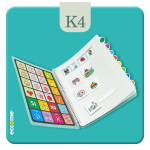
A low tech AAC system consisting of pictures, symbols, or a core words board provides more ways for an individual to communicate.
High tech AAC devices (think tablets, iPads) can be incredibly effective for individuals in most situations, but what if an individual is in a pool? It is probably not wise to have an electronic device that could sustain water damage next to the pool, but a laminated communication book could be used for this situation. Individuals with high tech AAC systems may benefit from having a low tech AAC system as well.
Some individuals may not be a proper candidate for a high tech AAC system, secondary to physical and/or cognitive impairments. They may not be able to communicate more than a few messages, so a few symbols (more, finished) or choices may be adequate for them. Some individuals also prefer to use low tech AAC over high tech AAC.
There are so many great reasons to use light tech AAC as part of a robust communication system! These include:
- Economical
- Flexible options
- Customized and developed over time
- May be readily accepted by communication partners
- Multiple access modalities (direct, eye gaze, manipulative, partner assisted)
- Customizable vocabulary
- Use in multiple locations due to ease of printing
- Can be as big or small as needed
- Easily replaceable
- A qualitative study by Iacono interviewed adults who use AAC and found that reasons they liked using light tech communication methods included the fact that they were less obstructive, allowed closer contact with communication partners, and lacked the breakdowns of high tech AAC
References
ASHA American Speech-Language-Hearing Association
Speech therapy talk
Resources
ISAAC International Society for Augmentative and alternative communication
AAC INSTITUTE Resource and Advocate for the AAC Community
Discover the multilingual products for Augmentative Alternative Communication:




 ECCOME